When the Guest List Includes the Planet: Sustainability as a Standard of Event Excellence
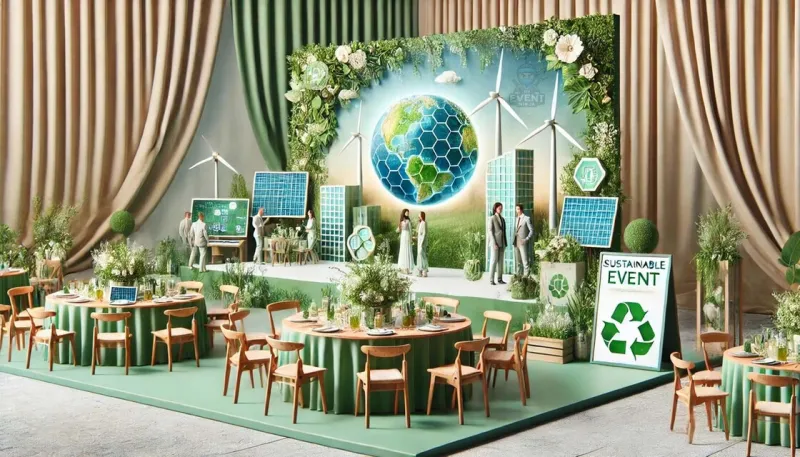
Photo: sustainable eco-friendly event decor local catering zero waste conference, via www.myeventninja.com
There was a time, not long ago, when a company could announce a "green event" with a water station and a recycling bin and expect a paragraph of favorable press. That era is over. Today's stakeholders—employees, clients, investors, and the journalists who cover all three—expect environmental commitments to be specific, measurable, and visible in the guest experience itself.
This shift is not a trend to be monitored. It is a standard to be met. And the companies that meet it well are discovering that sustainability, executed properly, does not diminish an event. It elevates one.
Why the Bar Has Moved
Several forces have converged. ESG reporting frameworks now ask large US companies to account for the environmental footprint of their operations, and travel-heavy events sit squarely inside that accounting. Corporate procurement teams increasingly require sustainability documentation from vendors, including event partners. And a generational shift in the workforce means the audience judging your event is more attuned to performative environmentalism than any cohort before it.
The result is asymmetrical risk. A thoughtfully sustainable event earns quiet credibility. A cynical one—a "green" gala that flies in out-of-season flowers and discards 400 uneaten entrées—earns something considerably worse. Attendees notice. Increasingly, they post about it.
The Real Tradeoffs, Honestly Weighed
Credible sustainability is a discipline of tradeoffs, not slogans. Consider the practical decisions behind a well-executed event:
Local sourcing over spectacle. Menus built around regional producers in season—Heirloom tomatoes from a New Jersey farm in August, Gulf shrimp for a Houston event—reduce transportation emissions and, as a bonus, taste better. The tradeoff is less menu uniformity across seasons and regions. Planners who know their local supplier networks turn that constraint into a point of distinction rather than a limitation.
Digital-first invitations and programs. Event apps and QR-based programs eliminate print runs that are obsolete the moment a speaker changes. The genuine tradeoff is accessibility: not every guest wants to navigate a phone at a seated dinner. The answer is not choosing sides but designing a hybrid—digital by default, with a small quantity of printed materials produced responsibly for those who need them.
Food waste as a design problem. The most sophisticated events now treat catering volumes as a planning variable rather than a liability. Accurate RSVP management, family-style or chef-attended service instead of sprawling buffets, and pre-arranged donation partnerships with local food recovery organizations can cut post-event waste dramatically. What cannot be donated can often be composted—if the venue and caterer were selected with that capability in mind.
Venue selection as a sustainability decision. A downtown hotel near public transit, with strong existing environmental certifications, accomplishes more than any single on-site gesture. Reducing the need for thousands of individual car trips is, bluntly, the largest lever most corporate events can pull.
Where Professional Planning Earns Its Place
Here is the uncomfortable truth for well-intentioned companies: sustainability fails most often not from indifference but from execution gaps. The caterer was never asked about composting. The donation partner was never lined up. The venue's recycling claim turned out to be a single stream that ends in a landfill.
Professional planners close these gaps because they ask these questions routinely. They know which venues in a given market have functioning organic waste programs, which caterers have established relationships with food recovery nonprofits, and which decoration choices can be rented, reused, or donated rather than discarded. They can also distinguish genuine credentials from greenwashed marketing—increasingly its own specialized skill.
Just as important, planners protect the guest experience while doing it. Sustainability that guests must work to notice is sustainability that fails; sustainability woven seamlessly into excellent food, thoughtful design, and smooth logistics is the version that builds brand equity.
Commitment, Not Costume
The companies getting this right treat sustainable events the way they treat financial reporting: as a practice with standards, documentation, and accountability. They set measurable targets, collect post-event data, and report results honestly—including where they fell short.
That posture, more than any single initiative, is what modern audiences reward. A company that says "here is what we did, here is what it saved, and here is what we will improve next year" demonstrates precisely the seriousness that a lanyard made of recycled paper cannot.
Sustainability in event planning has graduated from differentiator to expectation. The question is no longer whether your events reflect environmental responsibility, but whether they do so credibly—and who is ensuring that they do.