Ready for Your Flagship Moment? An Honest Readiness Check Before You Commit
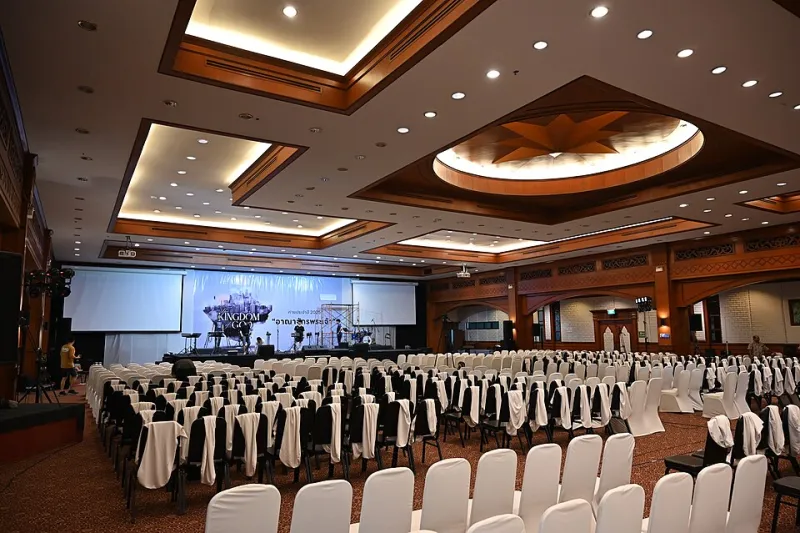
Photo: PattayaPatrol, CC BY-SA 4.0, via Wikimedia Commons
Every major American city now hosts at least one corporate event that has become a fixture of its business calendar—the annual client summit in Chicago, the founder's gala in Nashville, the partner retreat that Austin's tech scene quietly plans around. These flagship occasions do not happen by accident. They happen because a company reached a specific point of organizational maturity and made a deliberate bet.
The question for leadership teams contemplating their own signature event is not whether such an event is a good idea. It is whether your company is ready for one. Here is an honest framework.
Five Signs You Are Ready
1. You have a strategic reason, not just a calendar gap
The strongest flagship events solve a defined business problem: deepening client relationships in a key market, signaling a new chapter after a merger, or creating a recurring touchpoint for a distributed workforce. If the honest answer to "why this event?" is "we haven't done anything in a while," pause. A flagship built on a vague impulse rarely survives its second year.
2. Budget maturity has arrived
Readiness is not about having a large budget—it is about having a stable one. Can your organization commit meaningful funds for three consecutive years, understanding that year one rarely pays for itself? Companies that treat a signature event as a one-time expense almost always underinvest, and the event suffers for it. Companies that treat it as a multi-year brand asset fund it accordingly.
3. An executive sponsor exists—and will stay engaged
Every enduring flagship event has a senior leader whose reputation is attached to it. Not a committee. Not a rotating title. A person. If you can name that individual and trust their commitment through at least one budget cycle, you have cleared a hurdle that stalls many first-time events.
4. Internal bandwidth has been honestly assessed
Someone on your team will own this project alongside their day job—or the event will become their day job at the expense of everything else. Ready organizations either have dedicated capacity or have already decided to engage professional planning support. Unready organizations assume the marketing coordinator can handle it "on top of things." That assumption is where first events go to die.
5. Your brand can withstand scrutiny
A signature event is a magnifying glass. It will be scrutinized by clients, employees, and competitors as a statement of who you are. If your house is in order—your culture, your messaging, your customer relationships—an event amplifies strength. If it is not, an event amplifies the cracks. Readiness sometimes means fixing the underlying business first.
Three Signs You Are Not There Yet
1. The budget is contested every quarter
If funding for the event requires a fresh argument at every leadership meeting, the event will be planned in a state of chronic uncertainty. Cutting scope mid-planning produces a compromised experience that damages more than it builds. Wait until the financial commitment is settled.
2. Key stakeholders want different events
When sales wants a client summit, HR wants an employee celebration, and the CEO wants a press moment, you do not have one event—you have three competing ones sharing a budget. Until leadership aligns on a single strategic purpose, any event produced will satisfy no one.
3. Your team is already at capacity
The most common readiness failure is not ambition—it is arithmetic. If your internal team is stretched across product launches, restructuring, or growth targets, the event will inherit whatever attention is left over, which is to say, none.
The Strategic Power of Waiting
There is a persistent myth in corporate America that deferring an event signals weakness. In practice, the opposite is often true. Companies that spend a year building budget discipline, aligning stakeholders, and defining measurable objectives routinely launch stronger, more durable flagship events than their impatient competitors.
A signature event is a compounding asset. Done right, its value grows with each edition—attendance deepens, anticipation builds, and the occasion itself becomes part of your market identity. Done hastily, it becomes a cautionary tale told in your industry for years.
The smartest first question is not "when should we host it?" It is "what has to be true about our organization before we do?" Answer that honestly, and the timing will reveal itself.