The Final 72 Hours: How Professional Planners Secure the Outcome Before a Single Guest Walks Through the Door
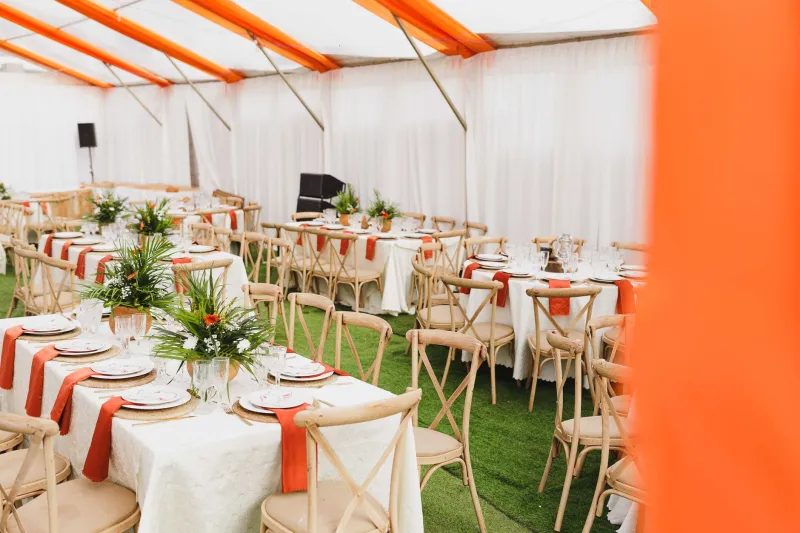
There is a persistent misconception in corporate event management: that the measure of a planner's skill is visible only on the day of the event itself. Guests arrive, programming unfolds, and the experience either delivers or it doesn't. What this perspective misses entirely is that the outcome—successful or otherwise—was largely determined well before the first attendee stepped off the elevator.
The 72-hour window preceding any major corporate event represents the most operationally dense and consequential phase of the entire planning cycle. It is the period when months of preparation either crystallize into coordinated execution or begin quietly unraveling under the pressure of converging variables. For organizations that manage events internally, this window is frequently underestimated. For professional planners, it is treated as a distinct operational discipline with its own protocols, communication structures, and decision-making frameworks.
Why the Pre-Event Window Is Categorically Different From Everything That Came Before
For most of the planning timeline, complexity is manageable because it is largely sequential. Venue contracts are negotiated, then signed. Catering menus are proposed, then approved. Speaker logistics are coordinated, then confirmed. Each phase has defined handoffs and reasonable response windows.
The final 72 hours collapse that sequential structure entirely. Every workstream that has been developing in parallel suddenly converges at the same physical space, at the same time, with the same vendors, staff, and stakeholders all operating simultaneously. The venue team is conducting load-in while the audiovisual crew is running cable. The catering coordinator is finalizing counts while the registration system is being tested. The client's internal communications team is requesting last-minute signage changes while the production schedule is being distributed.
None of these activities are inherently problematic in isolation. The challenge is that they are all happening in compressed time, often in the same physical environment, and each one carries downstream dependencies that affect everything else. A delay in one workstream does not stay contained—it propagates.
The Communication Architecture That Holds Everything Together
One of the most significant differentiators between professional event management and internal corporate planning is the sophistication of the communication infrastructure deployed during this final phase. Experienced planners do not rely on a single channel or a general group message thread. They build layered communication systems calibrated to the specific needs of each stakeholder group.
Vendors and production crews operate on a different information cadence than executive stakeholders. Site staff require real-time updates on logistics that would be irrelevant—and potentially confusing—to the client's leadership team. Speakers and presenters need targeted briefings focused exclusively on their individual responsibilities, not a comprehensive operational overview that introduces unnecessary complexity.
Professional planners maintain these parallel communication streams deliberately, ensuring that each party receives precisely the information they need, at the moment they need it, without being burdened by information that falls outside their scope. This discipline prevents the kind of communication overload that causes critical instructions to be missed or misinterpreted under pressure.
Scenario Planning at Scale: The Decision Tree in Action
Every professional planner arrives at the final 72-hour window with a contingency framework already in place—but the value of that framework is not simply that alternatives exist. It is that the decision-making authority for each scenario has been clearly assigned in advance.
When a catering delivery arrives two hours behind schedule on the morning of a 400-person corporate luncheon, the question is not merely logistical. It is organizational: who has the authority to approve an alternate solution, what is the acceptable cost threshold for that decision, and how quickly can a resolution be implemented without disrupting the broader production timeline?
Planning teams that have not addressed these questions in advance will spend critical minutes—sometimes longer—navigating internal approval chains while the window for effective response narrows. Professional planners resolve this before the scenario occurs, ensuring that when a decision needs to be made, the right person makes it immediately and without ambiguity.
The Final Walkthrough: More Than a Visual Inspection
Among the protocols that professional planners treat with particular rigor during this period is the comprehensive site walkthrough—a process that is frequently misunderstood as a visual confirmation that the room looks correct. In practice, an effective pre-event walkthrough is a structured audit conducted against a detailed checklist that spans every operational element of the event.
This includes verifying that audiovisual systems have been tested under conditions that replicate the live event environment, not simply confirmed as functional in isolation. It means confirming that all staff have received their assignments and understand the escalation protocol if something falls outside their authority to resolve. It means checking that wayfinding signage is positioned from the perspective of a guest who has never been to the venue before—not from the perspective of someone who has spent the last three days inside it.
The walkthrough also serves a second function that is easy to overlook: it surfaces the small details that were correct on paper but require adjustment in the physical reality of the space. The registration table that made sense in the floor plan but creates a bottleneck at the actual entrance. The cocktail reception layout that works mathematically but will feel congested once guests are present. These are the calibrations that only become visible when an experienced eye moves through the space with deliberate attention.
Managing the Client Relationship During Peak Complexity
The final 72 hours also represent a particularly sensitive period in the client relationship. Stakeholders who have been deeply invested in the event for months are often experiencing heightened anxiety as the date approaches, and that anxiety can manifest as a surge in last-minute requests, approval reversals, or scope additions that the operational team is not positioned to absorb.
Managing this dynamic is a skill that professional planners develop through experience. It requires the ability to distinguish between requests that are genuinely addressable within the remaining timeline and those that carry operational risk—and to communicate that distinction clearly, respectfully, and without creating conflict. The goal is not to suppress a client's input in the final stretch. It is to ensure that the decisions being made during this period are informed by an honest understanding of what is possible and what is not.
The Standard That Guests Never See
When an event unfolds without disruption—when the program runs on time, the environment feels precisely calibrated, and guests move through the experience without friction—the underlying operational discipline that made it possible is entirely invisible. That invisibility is not incidental. It is the intended outcome.
The 72 hours before an event are not background preparation. They are the phase during which every prior decision is validated, every contingency is positioned, and every stakeholder is aligned. At Universal Special Events, this period is treated with the same strategic seriousness as any other phase of the planning process—because we understand that the experience guests remember is built on a foundation they will never see, in the hours before they arrive.