One Room, Four Realities: Designing Corporate Events That Resonate Across Every Generation in the Room
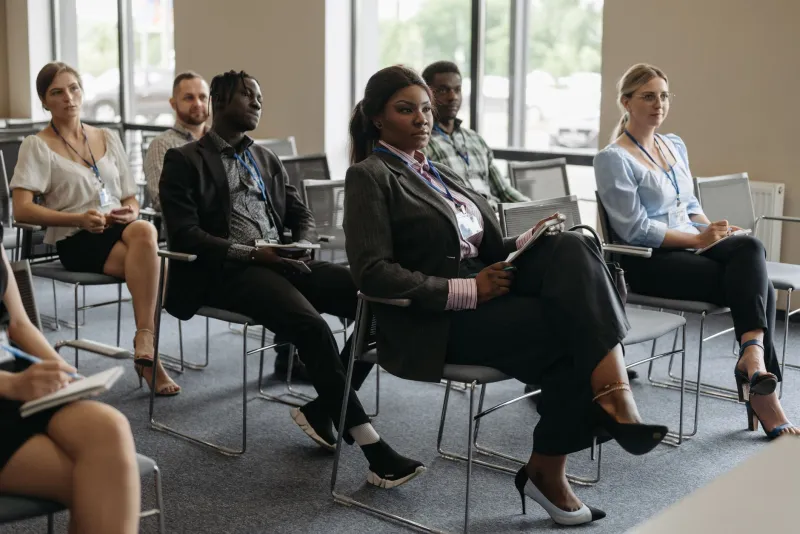
There is a particular kind of planning failure that never announces itself. No one raises a hand during the event to say they feel overlooked. No one submits a complaint at the registration desk. The signals are subtler—a cluster of younger attendees scrolling through their phones during a keynote, a group of senior professionals quietly stepping away from a networking session that feels performative rather than purposeful, a general sense that the energy in the room is divided rather than unified.
This is the generational disconnect at work. And for organizations that invest significantly in corporate events, it represents a quiet but meaningful erosion of return.
The assumption that a single event format will resonate equally with a 28-year-old marketing associate and a 58-year-old division president is not just optimistic—it is strategically unsound. Today's American workforce spans four distinct generational cohorts, each carrying different formative experiences, communication preferences, and deeply held definitions of what makes a professional gathering feel worthwhile. When event strategy ignores those differences, it does not offend anyone dramatically. It simply fails to move them.
The Problem With the Monolithic Attendee
For decades, corporate event design defaulted to a kind of universal professional—a hypothetical attendee whose preferences were assumed to represent everyone in the room. Programming was built around this composite figure: formal presentations, structured networking, printed materials, and a reception at the end. The format was familiar, predictable, and largely effective for the workforce of a previous era.
That workforce no longer exists in isolation. A mid-sized American company hosting its annual leadership summit today may have attendees ranging from Gen Z professionals in their early twenties to Baby Boomers in their early sixties—and every cohort between them. Each group arrives with a different relationship to technology, a different tolerance for formality, a different understanding of what "connection" looks like in a professional context, and a different threshold for what they consider a valuable use of their time.
Cookie-cutter programming does not bridge those differences. It averages them—and in doing so, fully serves no one.
What Each Generation Actually Brings to the Room
Understanding generational expectations is not about reducing individuals to stereotypes. It is about recognizing that shared cultural and technological experiences shape collective preferences in ways that are both documented and practically significant for event design.
Gen Z attendees (born roughly 1997–2012) have grown up in an environment of constant, on-demand information access. They are fluent in digital interaction and tend to evaluate events through the lens of authenticity and relevance. Passive consumption—sitting through a one-way presentation without any mechanism for engagement—registers quickly as a poor use of time. They respond well to interactive formats, real-time participation tools, and programming that acknowledges their perspective as genuinely valuable rather than decorative.
Millennials (born roughly 1981–1996) represent the largest segment of the current U.S. workforce and are now well into mid-career and leadership roles. They bring a strong orientation toward purpose and outcomes. They want to understand not just what is happening at an event, but why it matters—what the gathering is meant to accomplish and how it connects to something larger. Networking formats that feel transactional or superficial tend to underperform with this cohort; they gravitate toward shared experiences and substantive conversation.
Gen X professionals (born roughly 1965–1980) often operate as the connective tissue of organizational hierarchies—experienced enough to hold institutional knowledge, pragmatic enough to cut through noise. They tend to value efficiency, directness, and substance over spectacle. They are comfortable with technology but do not require it to feel engaged. What earns their investment is programming that respects their time and delivers genuinely useful content or meaningful peer interaction.
Baby Boomers (born roughly 1946–1964) bring depth of experience and a preference for relationship-centered engagement. Many were shaped professionally in environments where in-person interaction carried significant weight, and that instinct remains strong. They often find heavily technology-mediated event formats alienating rather than innovative. Face-to-face conversation, deliberate introductions, and structured opportunities for substantive dialogue tend to resonate far more than gamified networking apps or QR-code-dependent programming.
The Design Challenge: Integration, Not Segmentation
The natural temptation, once these distinctions are understood, is to segment the event—to create separate tracks or programming streams tailored to each cohort. In limited contexts, that approach has merit. But for most corporate gatherings, the greater strategic opportunity lies in designing experiences that work across generational lines simultaneously, rather than partitioning the audience.
This requires a different kind of intentionality from the outset.
Professional event planners approach multi-generational design by identifying the universal human values that transcend cohort—the desire to feel seen, to contribute meaningfully, to connect with others in ways that feel genuine—and then building programming that honors those values through formats accessible to each group. A session structured around facilitated small-group dialogue, for instance, can satisfy Gen Z's appetite for participation, Millennials' preference for purposeful exchange, Gen X's demand for efficiency, and Boomers' orientation toward relationship without requiring separate sessions for each.
Technology integration is another area where thoughtful calibration matters enormously. An event that assumes universal comfort with a proprietary event app will lose a meaningful portion of its audience before the first session begins. An event that ignores digital engagement tools entirely will feel dated to attendees accustomed to seamless, interactive experiences. The professional approach is not to default to one end of that spectrum—it is to layer technology in ways that enhance participation for those who embrace it without creating barriers for those who don't.
Communication Style as an Event Design Variable
Generational differences extend beyond format preferences into the language and tone of the event itself. How programming is framed, how speakers are introduced, how agendas are written, and even how signage is worded all carry implicit signals about who the event was designed for.
An agenda that reads like a corporate memo will resonate differently than one that leads with outcomes and context. A keynote structured around a speaker's credentials and tenure will land differently than one structured around a challenge the audience collectively faces. These are not cosmetic distinctions—they are substantive choices that determine whether different segments of your audience feel addressed or overlooked.
Experienced planners understand that communication style is itself a design variable, and they approach it with the same rigor applied to logistics, venue selection, and programming structure.
Why This Work Belongs in Professional Hands
Designing for a multi-generational audience is not a checklist exercise. It requires a nuanced understanding of behavioral dynamics, a sophisticated approach to program architecture, and the kind of iterative refinement that comes from having managed hundreds of events across industries and audience types.
Organizations that attempt this calibration without professional guidance tend to default to what is familiar—which almost always means programming that reflects the preferences of whoever holds decision-making authority over the event, rather than the full range of people who will attend it.
The result is an event that works well for some and merely tolerates everyone else. In a corporate environment where events are expected to drive alignment, build culture, and deliver measurable outcomes, that is a significant gap.
At Universal Special Events, every engagement begins with a rigorous assessment of the audience—not just who will be in the room, but what each segment of that audience needs in order to leave feeling that their time was well spent. That foundation shapes every decision that follows, from venue selection to program flow to the smallest details of the attendee experience.
When every generation in the room feels genuinely considered, the event stops being a gathering and becomes something more durable: a shared experience that actually unifies rather than quietly divides.