What Your Event Says About You: Reading Company Culture Through the Details That Guests Never Forget
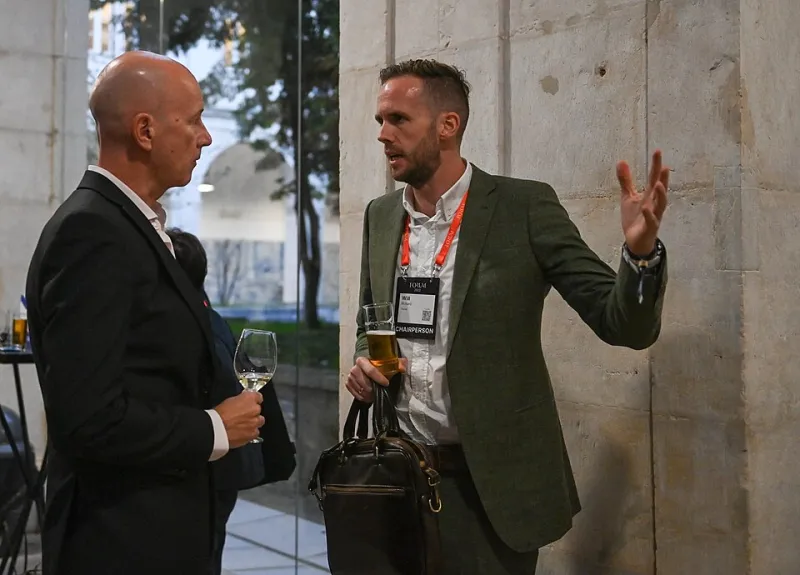
Photo: Web Summit, CC BY 2.0, via Wikimedia Commons
There is a particular kind of observation that happens at corporate events—one that has nothing to do with the keynote speaker or the branded centerpieces. It happens when a catering staff member is spoken to curtly by an executive. It happens when the dietary accommodations requested weeks in advance are nowhere to be found at the buffet table. It happens when the budget is clearly lavish in certain rooms and visibly thin in others.
Attendees notice. They do not always articulate what they notice. But they remember it—and they draw conclusions that no polished slide deck can override.
For organizations that invest significantly in corporate events, this reality carries weight. An event is not simply a gathering. It is an unscripted audit of who a company actually is.
The Gap Between Brand Messaging and Lived Experience
Most organizations spend considerable energy crafting a public-facing identity. Mission statements speak of inclusion. Annual reports emphasize employee wellbeing. Marketing materials reference a commitment to community and integrity. These are not necessarily hollow claims—but the corporate event is one of the few environments where stated values are tested against observable behavior in real time.
Consider inclusivity as an example. A company may articulate a robust commitment to diversity and belonging through its internal communications. Yet if an event's programming, imagery, speaker roster, and social activities cater exclusively to a narrow demographic within the organization, that gap becomes visible. Attendees from underrepresented groups register the absence. External guests form impressions. The culture is revealed not through what the company says it believes, but through what it chose to prioritize when designing an experience.
This is not a matter of political positioning. It is a matter of organizational coherence. When a company's event decisions align with its stated values, trust is reinforced. When they diverge, credibility erodes—quietly, but durably.
How Vendor Relationships Expose Internal Values
One of the least-examined dimensions of event culture is the treatment of vendors and service partners. Within any professional event environment, there are dozens of individuals working behind the scenes—setup crews, audiovisual technicians, catering teams, logistics coordinators. How an organization's representatives interact with these professionals is observed, frequently, by the very clients and employees the company is trying to impress.
A leadership team that dismisses vendors publicly, renegotiates agreed terms at the last moment, or fails to acknowledge the labor involved in an event's execution sends a clear message about how it views relationships beyond the executive suite. Conversely, organizations whose staff treat every contributor with professionalism and respect create an atmosphere that guests perceive as genuinely warm—often without being able to identify exactly why.
At Universal Special Events, the selection of service partners is treated as a reflection of client values, not merely a logistical exercise. The standards applied to vendors are the standards an organization implicitly endorses. That connection matters.
Budget Allocation as a Values Statement
Where money is spent reveals what is considered important. This is true in corporate finance, and it is equally true in event planning.
An organization that allocates a generous budget to executive dining experiences while providing a noticeably reduced experience for frontline employees—at the same event—communicates a hierarchy that no team-building exercise will fully counteract. Attendees at every level of an organization are perceptive. They understand the difference between a room that received full attention and one that received what remained after other priorities were satisfied.
None of this suggests that tiered experiences are inherently inappropriate. In many contexts, differentiated programming is both reasonable and expected. The issue arises when those distinctions feel like an afterthought rather than a deliberate and respectful design choice. Thoughtful budget allocation signals that every attendee's experience was considered. Careless allocation signals the opposite.
The Accessibility Dimension
Physical and logistical accessibility is another area where organizational values become concrete. Is the venue wheelchair accessible in practice, not merely on paper? Are translation or interpretation services available for non-English-speaking attendees? Are dietary needs—religious, medical, or personal—accommodated without requiring guests to navigate an obstacle course of exceptions?
When these considerations are addressed seamlessly, they convey respect. When they are absent or handled clumsily, they communicate that certain attendees were not fully imagined during the planning process. That omission is felt personally, regardless of how grand the event may otherwise appear.
For US-based organizations hosting diverse workforces or client bases, these details are not secondary. They are foundational to the impression an event leaves.
The Pressure of Spontaneity
Scripted moments are relatively easy to manage. The real test of an organization's culture comes during unscripted ones—when a technical failure occurs, when a guest has an unexpected need, when a timeline collapses. How leadership responds in those moments, and how the event team is empowered to respond, reveals the organization's actual operating culture.
Companies that have cultivated genuine internal trust and clear decision-making authority tend to navigate disruptions gracefully. Those where hierarchy is rigid and accountability is diffuse tend to respond with visible confusion or blame-shifting. Guests witness both. The event, in this sense, functions as a stress test.
Designing Events That Tell the Truth—Intentionally
The solution is not to engineer a performance of good culture. Attendees are perceptive enough to distinguish authentic organizational character from a curated impression, particularly over the course of a full-day event.
The more productive approach is to treat the planning process itself as a cultural exercise. What does the guest experience communicate at each touchpoint? Do the decisions made—about venue, programming, catering, accessibility, vendor relationships, and staff conduct—reflect the organization's actual commitments?
When planning is approached with that level of intentionality, the event becomes something more than a successful gathering. It becomes evidence. Evidence of an organization that understands the relationship between how it operates internally and how it is perceived externally.
That alignment, when achieved, is among the most powerful outcomes any corporate event can produce. It is also among the most difficult to manufacture after the fact—which is why it must be built in from the beginning.